
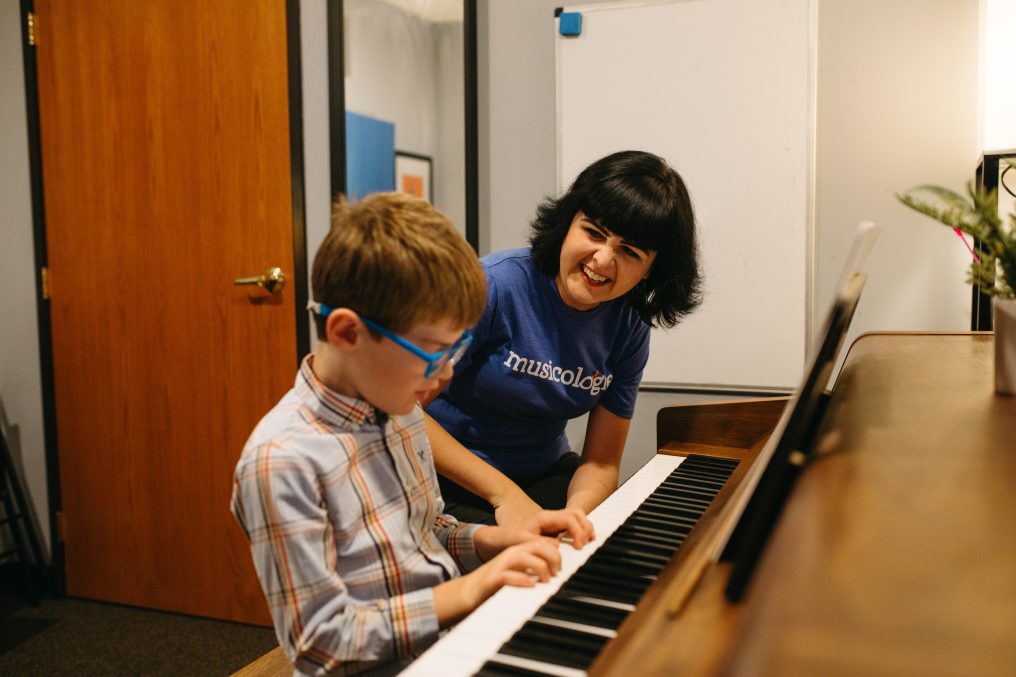

Hi! I’m Kay Barker, Musicologie’s Chief Education Officer, and I want to talk about something I see all the time with new students: the challenge of taking that first step toward a big goal. Whether it’s learning an instrument, starting a new hobby, or pursuing a life dream, the initial step is often the hardest. But the good news? Once you start, everything becomes a little easier.
Research shows that “taking the first step is the hardest part” because it requires leaving your comfort zone, facing uncertainty, and overcoming psychological barriers like fear of failure, perfectionism, and the anticipation of change. This combination makes the first step feel intimidating, even when we know the end goal is something positive. But understanding why it feels hard can help us break through that barrier.
Why the First Step is So Challenging
- Cognitive Dissonance: Our brains naturally resist change. Even when we want to move toward a goal, the discomfort of leaving the familiar can hold us back. It’s as if our brains are saying, “Are you sure you want to do this?” This resistance is normal, but it’s not a reason to stop.
- Fear of the Unknown: Stepping into a new situation often triggers anxieties about what could go wrong. “What if I’m not good at it?” or “What if I can’t keep up?” These fears can stop us in our tracks, even when the risk is small.
- Perfectionism: The idea that we need to start perfectly can be paralyzing. If we believe our first attempt must be flawless, we may never start at all. The truth is, starting messy is still starting, and it’s the only way to improve.
- Procrastination: Sometimes, the simple discomfort of starting something new leads us to put it off. We tell ourselves, “I’ll do it tomorrow,” but tomorrow doesn’t come. Delaying action can turn into a habit of inaction.
How to Overcome the Hurdle of the First Step
Getting past the initial barrier is key, and it’s easier than you might think!

- Set Small, Achievable Goals: Break down your goal into bite-sized steps. For example, if you want to learn piano, don’t focus on mastering a full piece right away. Start with booking one lesson or practicing a simple exercise for five minutes.
- Focus on the Positive: Remind yourself of why you want to take this step. Visualize the joy of playing your favorite song or the pride of seeing your child perform at their first recital. Staying connected to your “why” can provide motivation.
- Challenge Negative Self-Talk: If you catch yourself thinking, “I can’t do this,” or “I’ll never be good at it,” pause and reframe. Remind yourself that every expert started as a beginner, and your first step doesn’t have to be perfect—it just has to happen.
- Seek Support: Share your goal with a friend, family member, or teacher who can encourage you. At Musicologie, we’re here to cheer you on and make that first step as easy and welcoming as possible!
- Take Immediate Action: Don’t overthink it! Starting small—like picking up the phone to schedule a lesson or watching a video about your chosen instrument—can create momentum and make the next step feel natural.
At Musicologie, we understand how hard that first step can feel. But I promise, once you take it, everything else becomes easier. We’re here to help you or your child start that journey, and we’ll be with you every step of the way. So take a deep breath, start small, and let’s get going. You’ve got this!
Keep reading
 How Music Turbocharges the Brain – In Kids and Adults
 How Music Develops Grit and Perseverance
 FAQs About Lessons at Musicologie
 Why It’s Never Too Late (or Too Early) to Start Music Lessons
 From Beginner to Confident: What Progress Looks Like in Your First Year of Lessons
 The Top 5 Benefits of Music Lessons for Kids and Adults
 The Science of Practice: How Consistency Beats Perfection Every Time
 What’s The Difference Between Group and Private Lessons – And Which Should I Choose?
 How Music Shapes Brain Development in Young Kids
 What To Expect At Your Child’s First Music Lesson at Musicologie